

Types of Compensation in Personal Injury Cases
What Is Compensation in Personal Injury Cases?
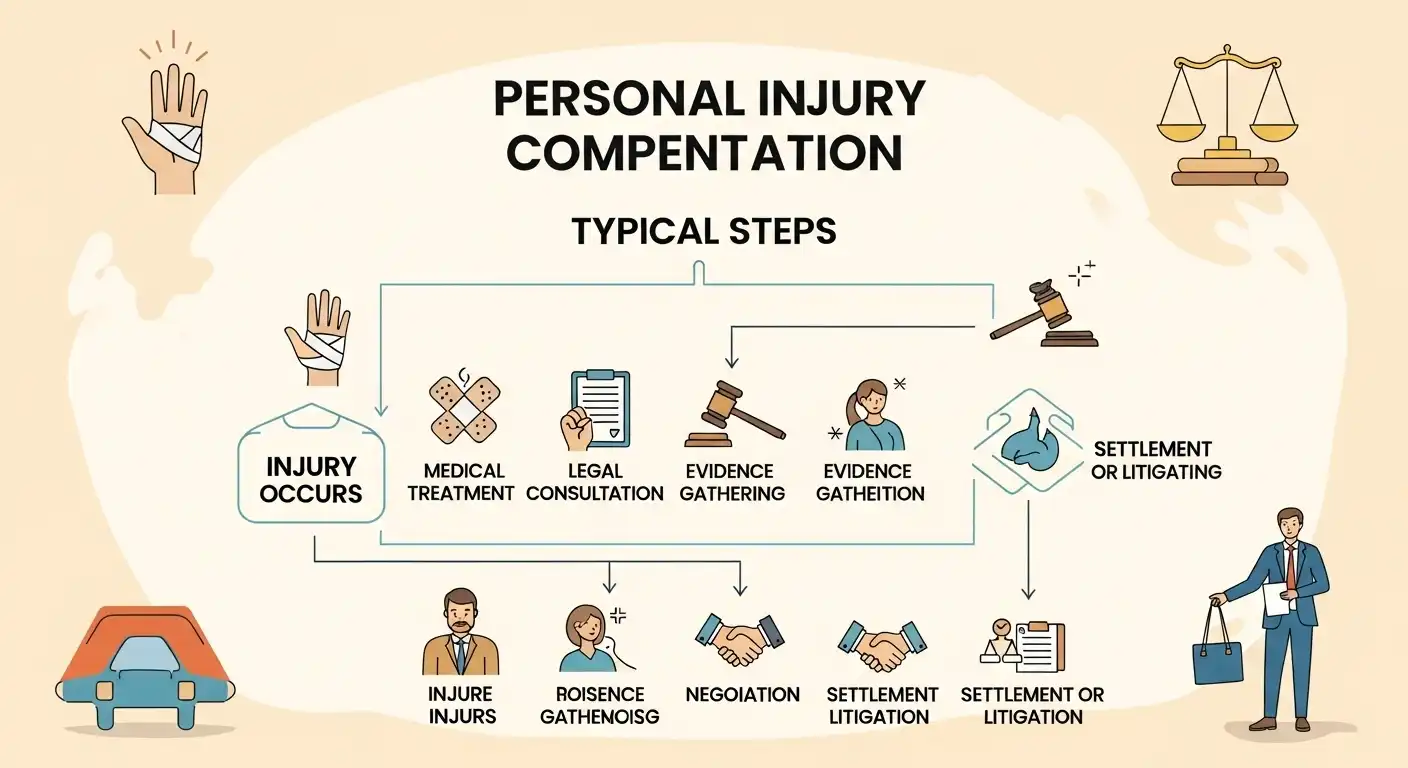
Compensation in personal injury cases refers to the financial recovery awarded to an injured person to cover losses caused by another party’s negligence. The goal of compensation is to restore the victim, as much as possible, to their position before the injury occurred.
Personal injury compensation may cover both tangible financial losses and intangible harm such as pain and emotional distress.
Why Compensation Is Important
Injuries can result in significant medical costs, lost income, and long-term effects. Compensation ensures that victims are not financially burdened by someone else’s wrongdoing.
Who Pays Compensation?
In most cases, compensation is paid by the at-fault party’s insurance company rather than the individual directly.
Economic Damages
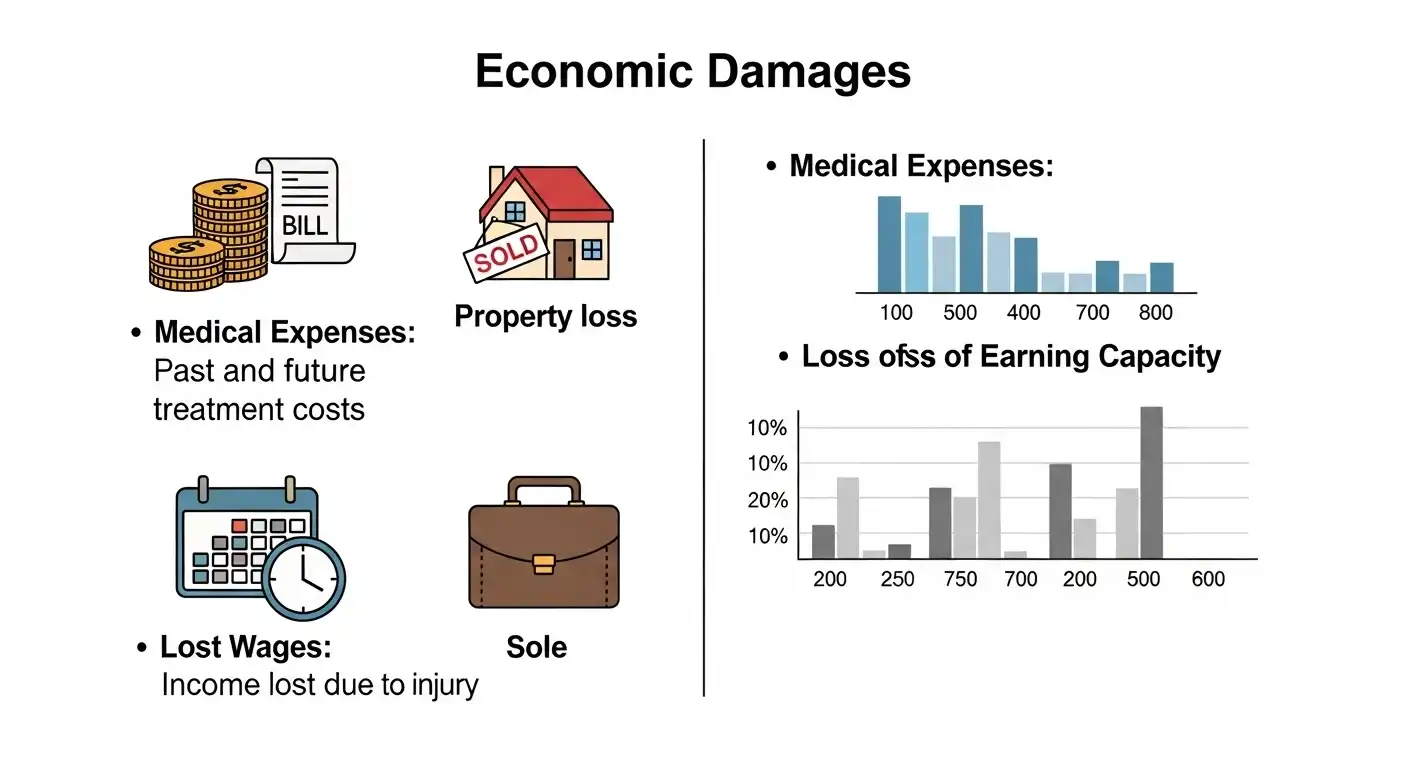
Economic damages compensate for measurable financial losses related to an injury. These damages are typically supported by bills, receipts, and employment records.
Examples of Economic Damages
- Medical expenses
- Hospital and rehabilitation costs
- Lost wages
- Loss of future earning capacity
- Property damage
Documenting Economic Losses
Accurate documentation is critical for recovering full economic damages.
Non-Economic Damages
Non-economic damages compensate for intangible harm that does not have a direct dollar value.
Examples of Non-Economic Damages
- Pain and suffering
- Emotional distress
- Loss of enjoyment of life
- Disfigurement or scarring
How Non-Economic Damages Are Evaluated
Courts and insurance companies consider injury severity, recovery time, and long-term impact when valuing non-economic damages.
For a deeper breakdown, see how pain and suffering is calculated.
Punitive Damages
Punitive damages are awarded in rare cases where the at-fault party’s conduct was especially reckless or intentional. These damages are meant to punish wrongdoing rather than compensate the victim.

When Punitive Damages Apply
- Drunk driving accidents
- Intentional harm
- Gross negligence
Limits on Punitive Damages
Many states impose caps or restrictions on punitive damages.
How Compensation Is Calculated
Total compensation is calculated by combining economic and non-economic damages, and in rare cases, punitive damages.
Settlement vs Court Awards
Most compensation is awarded through settlements rather than jury verdicts.
For claim steps, visit how personal injury claims work.
When to Hire a Personal Injury Lawyer to Maximize Compensation
Legal representation helps ensure all damages are properly calculated and supported by evidence.
According to Nolo Legal Encyclopedia, represented claimants often recover significantly higher compensation.
Final Thoughts
Understanding the types of compensation in personal injury cases allows victims to pursue fair and complete recovery. Knowing what damages are available prevents undervaluation of claims.
This article is part of our Personal Injury Knowledge Hub.