

What Is Personal Injury Law? A Complete Beginner’s Guide
What Is Personal Injury Law?
Personal injury law is a legal area designed to protect individuals who have been physically, emotionally, or financially harmed due to someone else’s negligence or intentional actions. The purpose of personal injury law is to help injured victims recover compensation for medical expenses, lost wages, pain and suffering, and other damages.
This area of law applies when a person or entity fails to act with reasonable care, causing harm to another individual. Personal injury cases are typically handled in civil court rather than criminal court.
Common Situations Covered by Personal Injury Law
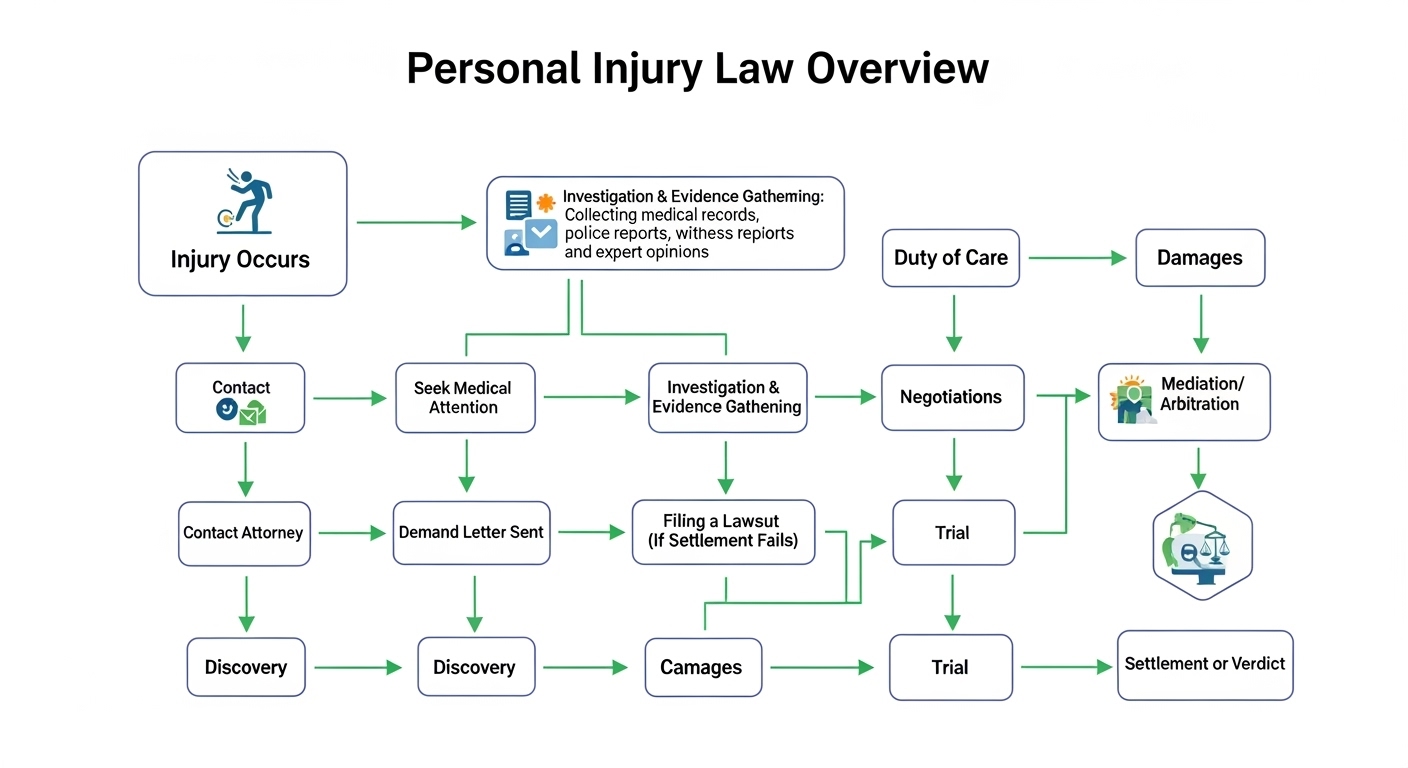
Personal injury law covers a wide range of incidents. Some of the most common situations include car accidents, slip and fall accidents, medical malpractice, workplace injuries, and defective products.
Each case focuses on whether negligence occurred and whether that negligence directly caused injury. For example, in a car accident, negligence may involve speeding, distracted driving, or driving under the influence.
Negligence Explained
Negligence is the foundation of most personal injury claims. It occurs when someone fails to act as a reasonably careful person would under similar circumstances. To prove negligence, four elements must be established: duty of care, breach of duty, causation, and damages.
Types of Personal Injury Cases
Personal injury cases come in many forms, each with its own legal standards and challenges.
- Car accidents
- Motorcycle and truck accidents
- Slip and fall injuries
- Medical malpractice
- Product liability
- Wrongful death

To learn more about accident-related claims, visit our internal guide on car accident injury claims.
How Personal Injury Claims Work
The personal injury claims process usually begins with medical treatment and documentation of injuries. After that, the injured party may file an insurance claim or lawsuit against the responsible party.
Most cases are resolved through settlement negotiations rather than going to trial. Settlements allow both sides to avoid lengthy court proceedings while providing compensation to the victim.
Filing a Claim
Filing a claim involves gathering evidence such as medical records, accident reports, witness statements, and expert opinions. These documents help establish liability and damages.
Compensation in Personal Injury Cases
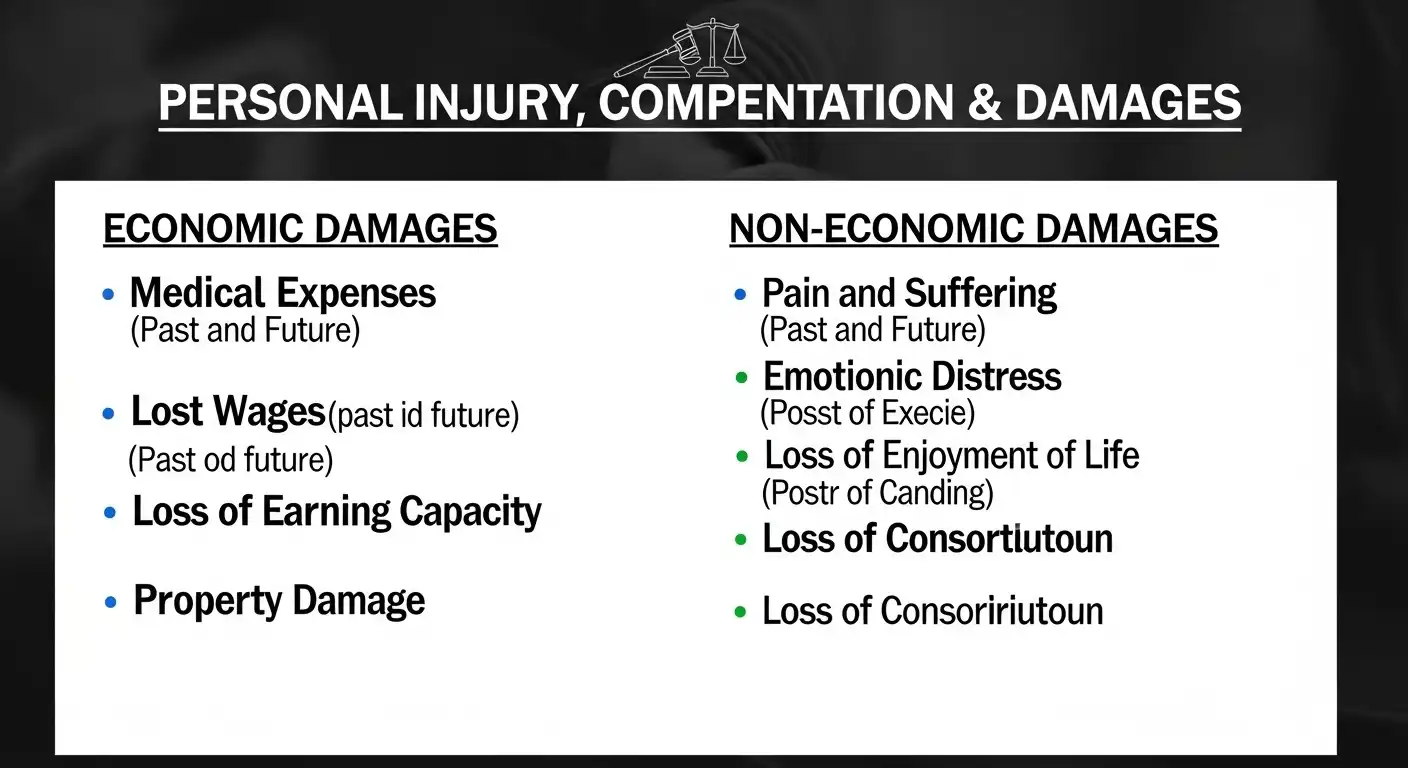
Compensation in personal injury cases is intended to restore the injured person to the position they were in before the accident, as much as possible.
Common types of compensation include:
- Medical expenses
- Lost income
- Future medical care
- Pain and suffering
- Emotional distress
You can read more about damages in our article on types of compensation in personal injury cases.
Do You Need a Personal Injury Lawyer?
While not all cases require legal representation, hiring a personal injury lawyer can significantly improve your chances of receiving fair compensation. Lawyers understand insurance tactics, legal procedures, and negotiation strategies.
According to the American Bar Association, legal representation is especially important in cases involving serious injuries or disputed liability.
Final Thoughts
Personal injury law exists to protect accident victims and hold negligent parties accountable. Understanding your rights is the first step toward recovery. Whether you are researching for knowledge or considering a claim, having accurate information empowers better decisions.