

Slip and Fall Accidents: Liability and Compensation
What Is a Slip and Fall Accident?
A slip and fall accident occurs when a person is injured after slipping, tripping, or falling due to a hazardous condition on someone else’s property. These accidents fall under premises liability law, which requires property owners to maintain safe conditions.
Slip and fall accident claims are among the most common personal injury cases and can occur in grocery stores, sidewalks, workplaces, apartment buildings, and public spaces.

Common Causes of Slip and Fall Accidents
Slip and fall accidents often result from unsafe or poorly maintained conditions.
- Wet or slippery floors
- Uneven pavement or flooring
- Poor lighting
- Loose rugs or mats
- Cluttered walkways
Where Slip and Fall Accidents Commonly Happen
These accidents frequently occur in retail stores, parking lots, staircases, sidewalks, and rental properties.
Who Is Liable in a Slip and Fall Accident?
Liability in slip and fall accidents depends on whether the property owner or manager knew, or should have known, about the hazardous condition and failed to fix it.
Property owners owe a duty of care to visitors, but the level of responsibility varies depending on the visitor’s legal status.
Duty of Care Explained
Property owners must take reasonable steps to inspect their property and correct dangerous conditions within a reasonable time.
Comparative Negligence
If the injured person was partially responsible for the fall, compensation may be reduced under comparative negligence rules.
How Slip and Fall Accident Claims Work
Slip and fall accident claims follow a similar process to other personal injury claims but require strong evidence of negligence.

Evidence Needed for a Slip and Fall Claim
- Photos or videos of the hazard
- Incident reports
- Witness statements
- Medical records
- Maintenance logs
Importance of Timely Documentation
Hazardous conditions may be repaired quickly, making immediate documentation critical to proving liability.
For a general overview, read our guide on how personal injury claims work.
Compensation in Slip and Fall Accident Claims
Injured victims may be entitled to compensation depending on the severity of injuries and long-term impact.
- Medical expenses
- Lost wages
- Rehabilitation costs
- Pain and suffering
- Emotional distress
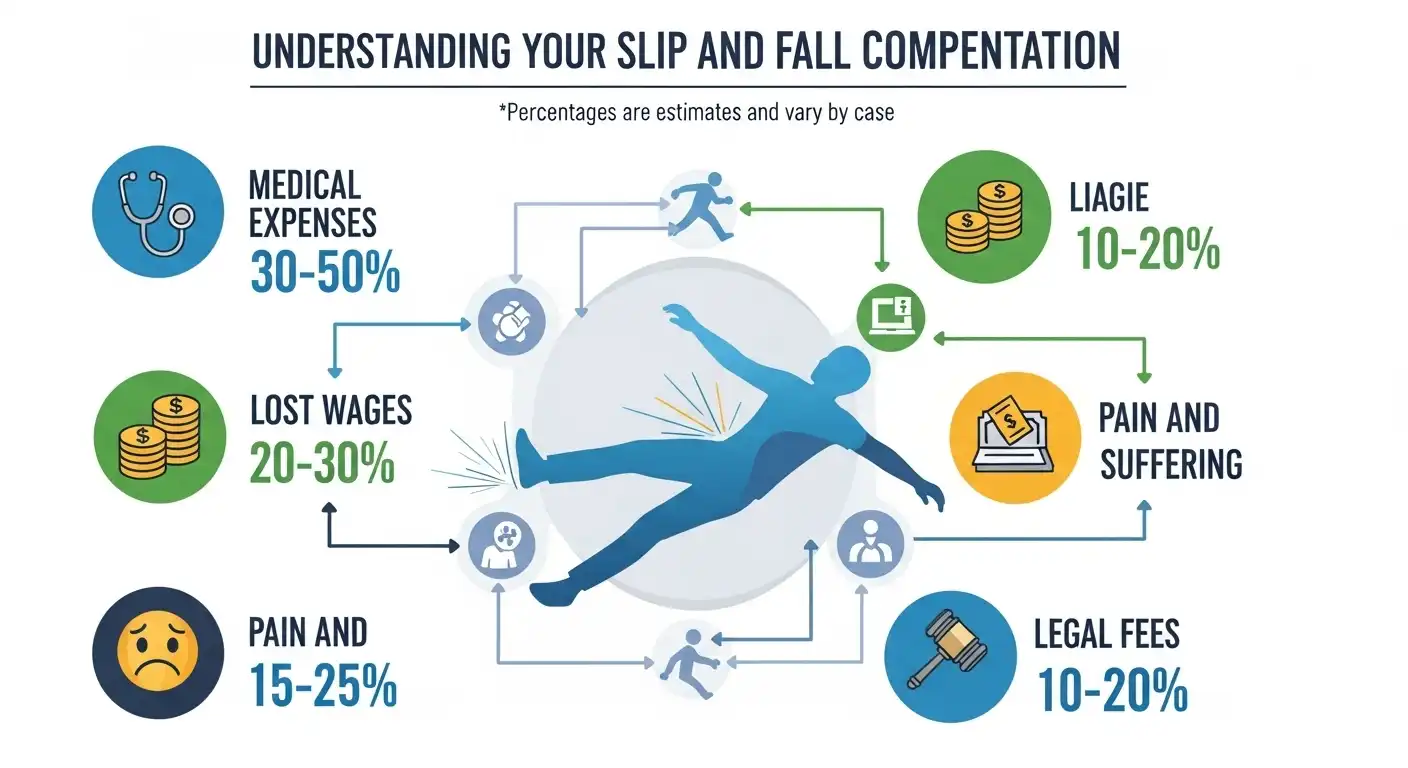
Learn more in our article on types of compensation in personal injury cases.
When to Hire a Slip and Fall Lawyer
Slip and fall cases can be difficult to prove, especially when property owners deny responsibility. Legal representation is often essential for building a strong claim.
According to Nolo Legal Encyclopedia, slip and fall claims frequently require expert testimony and detailed investigation.
Final Thoughts
Slip and fall accidents can cause serious injuries and long-term consequences. Understanding liability, evidence requirements, and compensation options helps protect your legal rights.
This article is part of our Personal Injury Knowledge Hub.