

How Pain and Suffering Is Calculated
What Is Pain and Suffering in Personal Injury Cases?
Pain and suffering refers to the physical pain, emotional distress, and overall reduction in quality of life experienced after an injury. Unlike medical bills or lost wages, pain and suffering is considered a non-economic damage because it does not have a fixed dollar value.
These damages are a major component of many personal injury claims and often make up a significant portion of total compensation.

Examples of Pain and Suffering
- Chronic physical pain
- Anxiety or depression
- Sleep disturbances
- Loss of enjoyment of life
- Emotional trauma
Temporary vs Permanent Suffering
Temporary pain may resolve during recovery, while permanent pain can affect daily life indefinitely.
Why Pain and Suffering Is Hard to Calculate
Because pain and suffering is subjective, there is no universal formula that guarantees a specific dollar amount. Insurance companies and courts rely on evaluation methods to estimate fair compensation.
Key Challenges in Valuation
- No direct financial measurement
- Varying pain tolerance among individuals
- Different injury severities
Role of Medical Evidence
Medical records, treatment duration, and physician opinions help support pain and suffering claims.
Common Methods Used to Calculate Pain and Suffering
Two primary methods are commonly used to calculate pain and suffering damages.
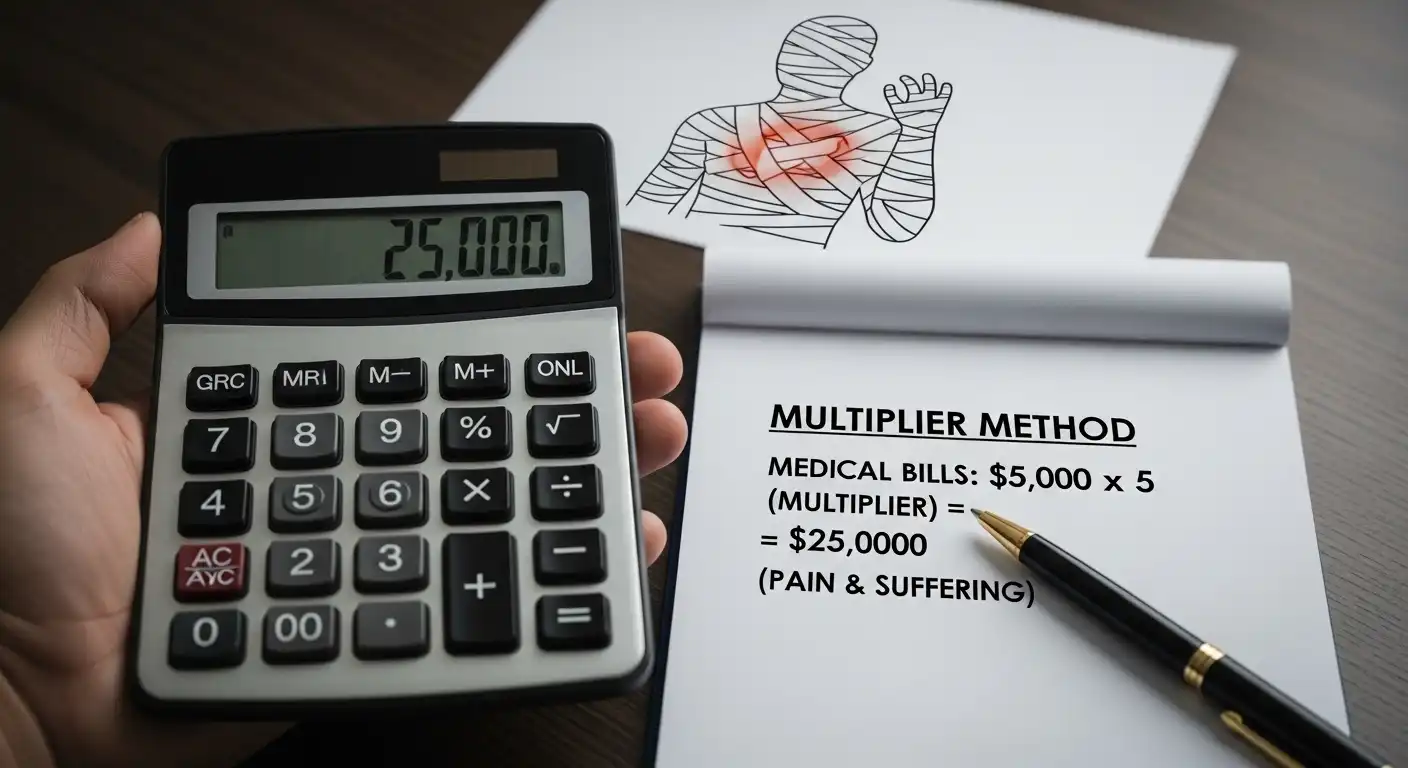
The Multiplier Method
The multiplier method adds up economic damages and multiplies them by a number, usually between 1.5 and 5, depending on injury severity.
When a Higher Multiplier Is Used
Severe injuries, long recovery periods, and permanent disabilities typically justify higher multipliers.
The Per Diem Method
The per diem method assigns a daily dollar value to pain and suffering and multiplies it by the number of days the victim experiences pain.
Limitations of the Per Diem Method
This method may be challenged if the daily rate appears unreasonable.
For a broader compensation overview, see types of compensation in personal injury cases.
Factors That Affect Pain and Suffering Awards
Several factors influence how much compensation is awarded for pain and suffering.
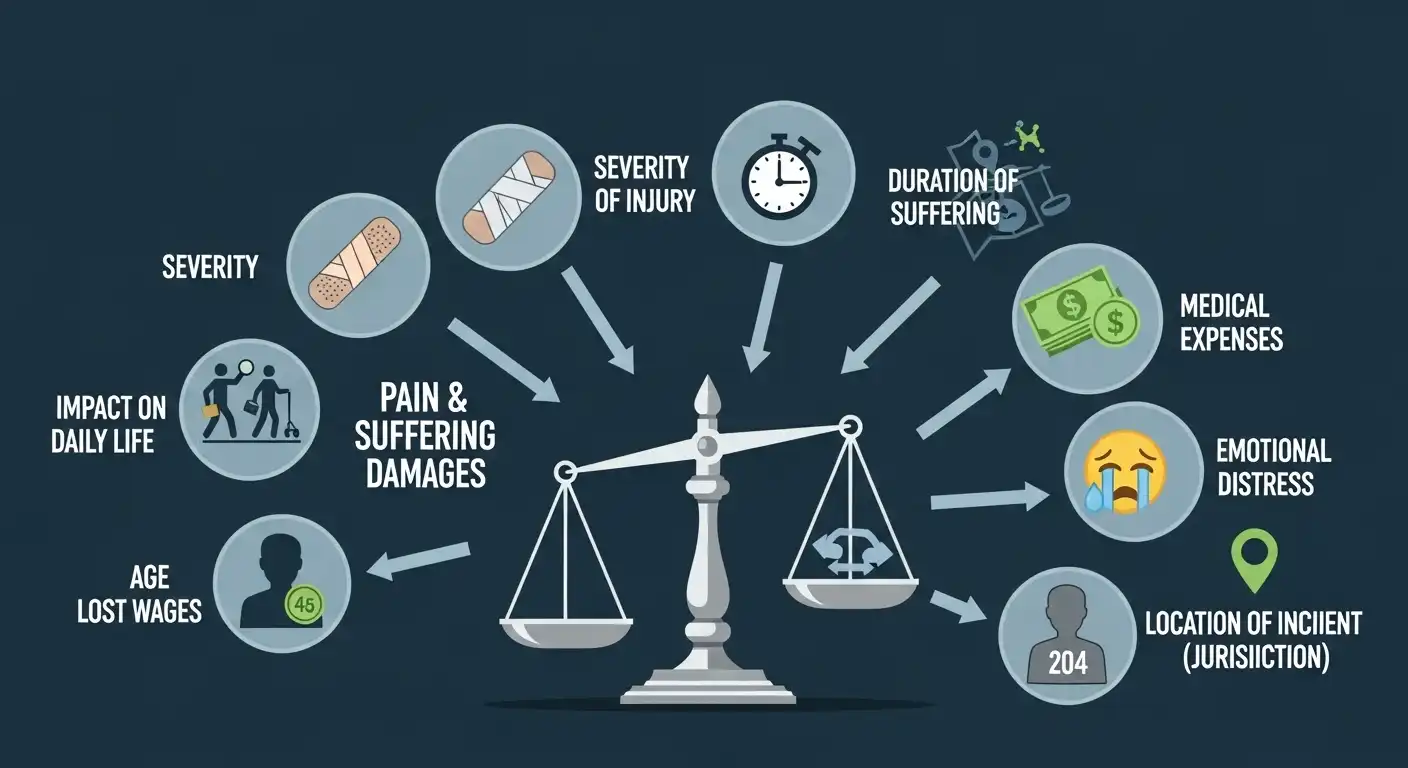
Major Influencing Factors
- Severity of the injury
- Length of recovery
- Permanent disability or scarring
- Impact on daily activities
- Credibility of medical evidence
Consistency in Treatment
Gaps in medical treatment may reduce pain and suffering awards.
Insurance Company Tactics
Insurance companies often attempt to minimize pain and suffering damages by disputing severity or arguing that injuries were pre-existing.
How to Protect Your Claim
Consistent medical treatment, detailed records, and clear documentation help counter insurance tactics.
For claim steps, visit how personal injury claims work.
When to Hire a Lawyer for Pain and Suffering Claims
Lawyers understand valuation methods and how to present evidence that supports higher non-economic damages.
According to the American Bar Association, professional representation often improves outcomes in non-economic damage claims.
Final Thoughts
Understanding how pain and suffering is calculated helps injury victims recognize the full value of their claims. Proper documentation and legal guidance are key to fair compensation.
This article is part of our Personal Injury Knowledge Hub.